
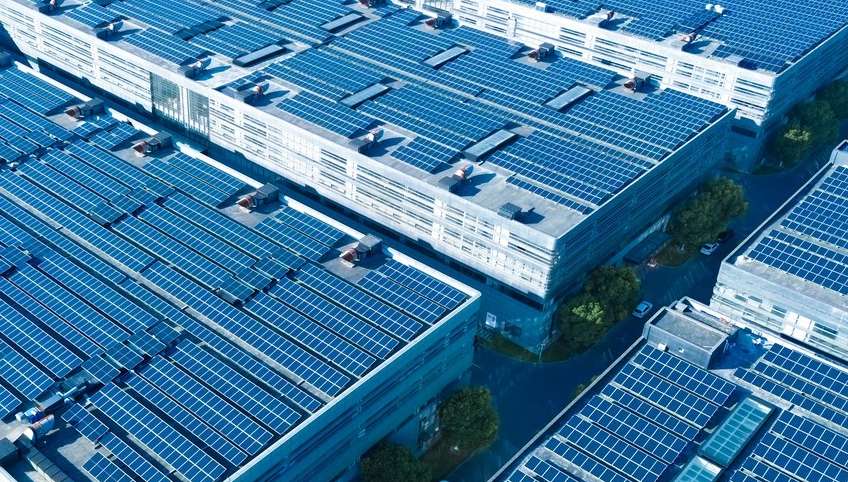
When evaluating commercial and industrial photovoltaic storage solutions, the attractive prospect of a high IRR (return on investment) and a short payback period is often compelling. But why do some projects fall far short of expected returns after implementation? This is because conventional calculations typically only account for the visible "peak-valley electricity price difference," while overlooking the "hidden ledger" that truly determines a project's success or failure.
Demand accounting: a "reducer" for optimizing electricity bill structure
Avoiding pitfalls warning: Energy storage is not just about buying low and selling high.
In addition to the electricity bill per kilowatt hour, large industrial power companies also need to pay high basic electricity bills. If the instantaneous power consumption of the enterprise surges and exceeds the contracted demand, additional expenses will be incurred.
Our new energy solution
Our EMS (Energy Management System) has the ability to accurately predict loads. Before the peak of electricity consumption, the intelligent scheduling energy storage system instantly discharges to achieve "peak shaving", reducing the maximum demand of transformers and thus lowering the basic electricity cost.
Uncovering the ledger
Peak valley arbitrage is the fundamental benefit, and relying on intelligent scheduling to save demand electricity costs is the robust increment to improve IRR.
Decay account: ensuring the full lifecycle profit curve
Avoiding pitfalls warning: Beware of the "later benefit halving" brought by low-priced battery cells.
If inferior battery cells or outdated air cooling systems are used to reduce initial investment costs, after several years of operation, the battery cells may accelerate aging due to excessive temperature differences. The significant decrease in actual discharge capacity will directly lead to a cliff like decline in mid to late stage earnings.
Our new energy solution
Light storage investment is a long run throughout the entire lifecycle, with the core being the control of LCOE (Life Cycle Cost of Electricity).
Strictly select first-line battery cells: ensure cycle life and consistency.
Advanced liquid cooling technology: Accurately controlling the temperature difference within 3 ℃, like providing a "constant temperature environment" for batteries, effectively delaying decay and ensuring a stable 20-year profit curve.
Security Account: Avoiding High 'Hidden Costs of Shutdown'
Avoidance warning: Safety is not a probability theory, but the most core economic indicator.
Energy storage systems are usually located adjacent to production lines. Once thermal runaway occurs, the losses are not only equipment, but also production stagnation, order defaults, and damage to corporate reputation. The loss of one day of work stoppage is enough to erode years of profits.
Our new energy solution
Without discussing the return on security, it lacks practical significance. We build a strong security defense line through a multidimensional protection system.
Stereoscopic warning mechanism: achieve deep monitoring from battery cells to systems.
Active defense system: relying on cloud big data, conduct millisecond level inspections of battery indicators to eliminate security risks.
Uncovering the ledger
The ultimate security guarantee is the "moat" of enterprises. Ensuring production continuity is the greatest way to break even and increase efficiency.
Conclusion
Light storage investment is not a simple asset purchase, but a complex energy management. Only by understanding demand management, system degradation, and security risks can we maintain the bottom line of IRR.
We not only provide you with visible high standard hardware, but also safeguard your IRR bottom line throughout the entire lifecycle through intelligent EMS algorithms and ultimate safety design.
Send Us A Message
Please give us a message